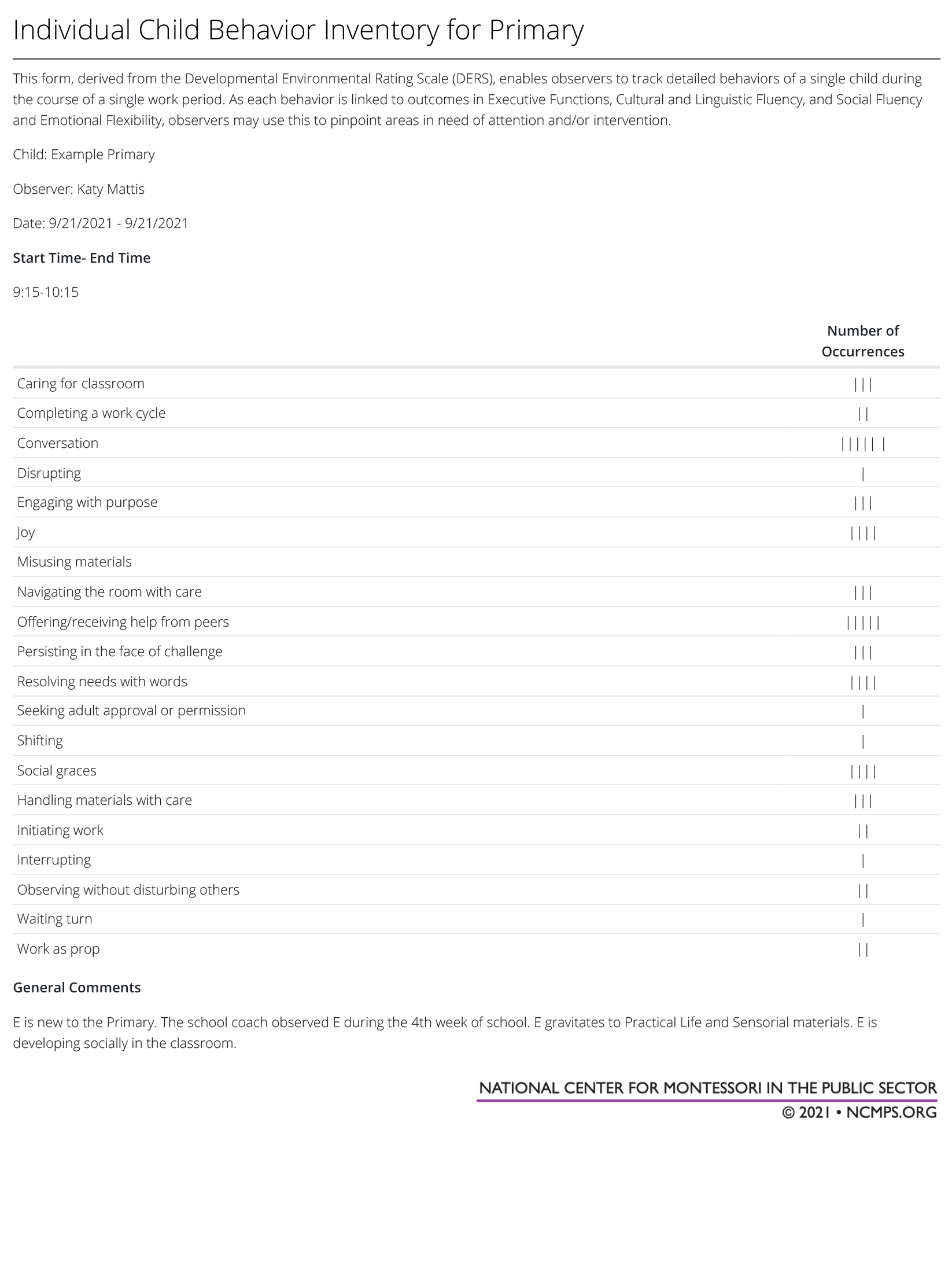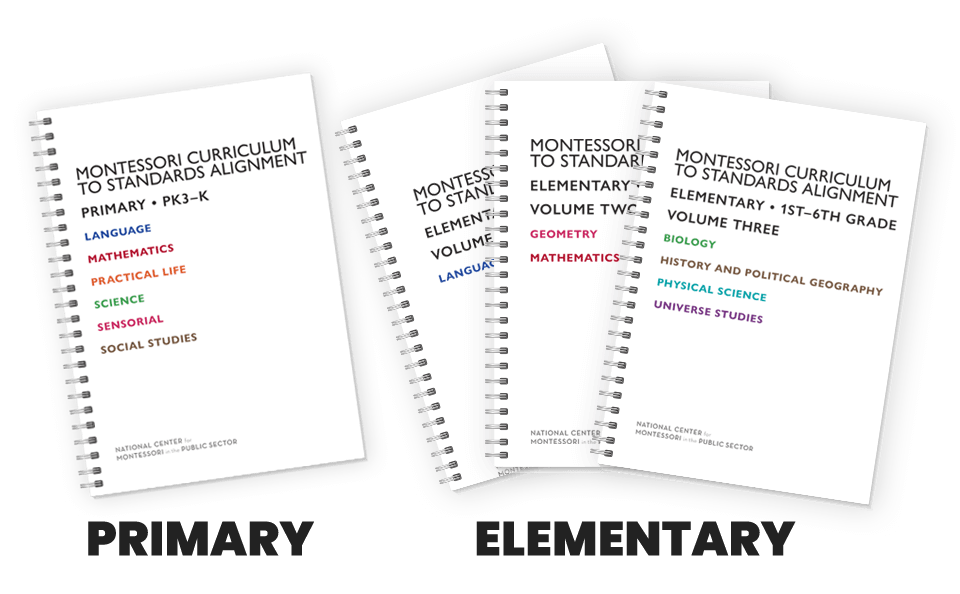
Measuring What Matters
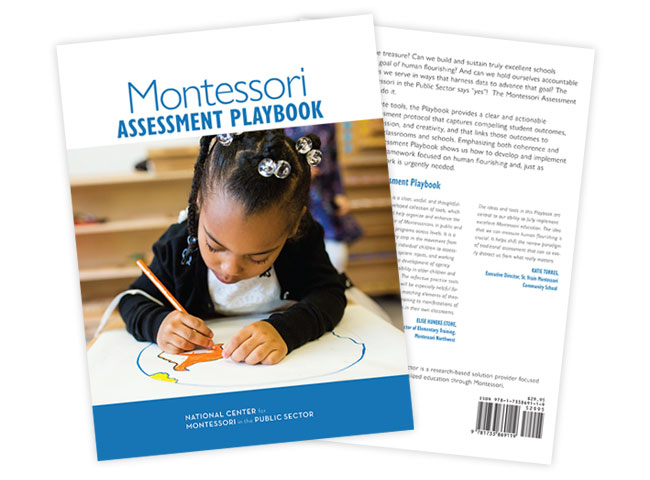
The Montessori Assessment Playbook
The Montessori Assessment Playbook is a strategy manual and collection of tools for implementing an assessment model grounded in Montessori and supporting human flourishing.
The Playbook contains 33 wide-scope assessment tools, including:
- Essential Elements Rubric
- Teacher, Assistant, and Executive Appraisal Instruments
- Observing Work Engagement Forms (Primary, Elementary, and Adolescent)
- Whole School and Teacher Reflective Practice Inventories
- Transition Skills Checklists for Primary to Lower Elementary, Lower to Upper Elementary, and Upper Elementary to Adolescent
Chapter 3—Observation
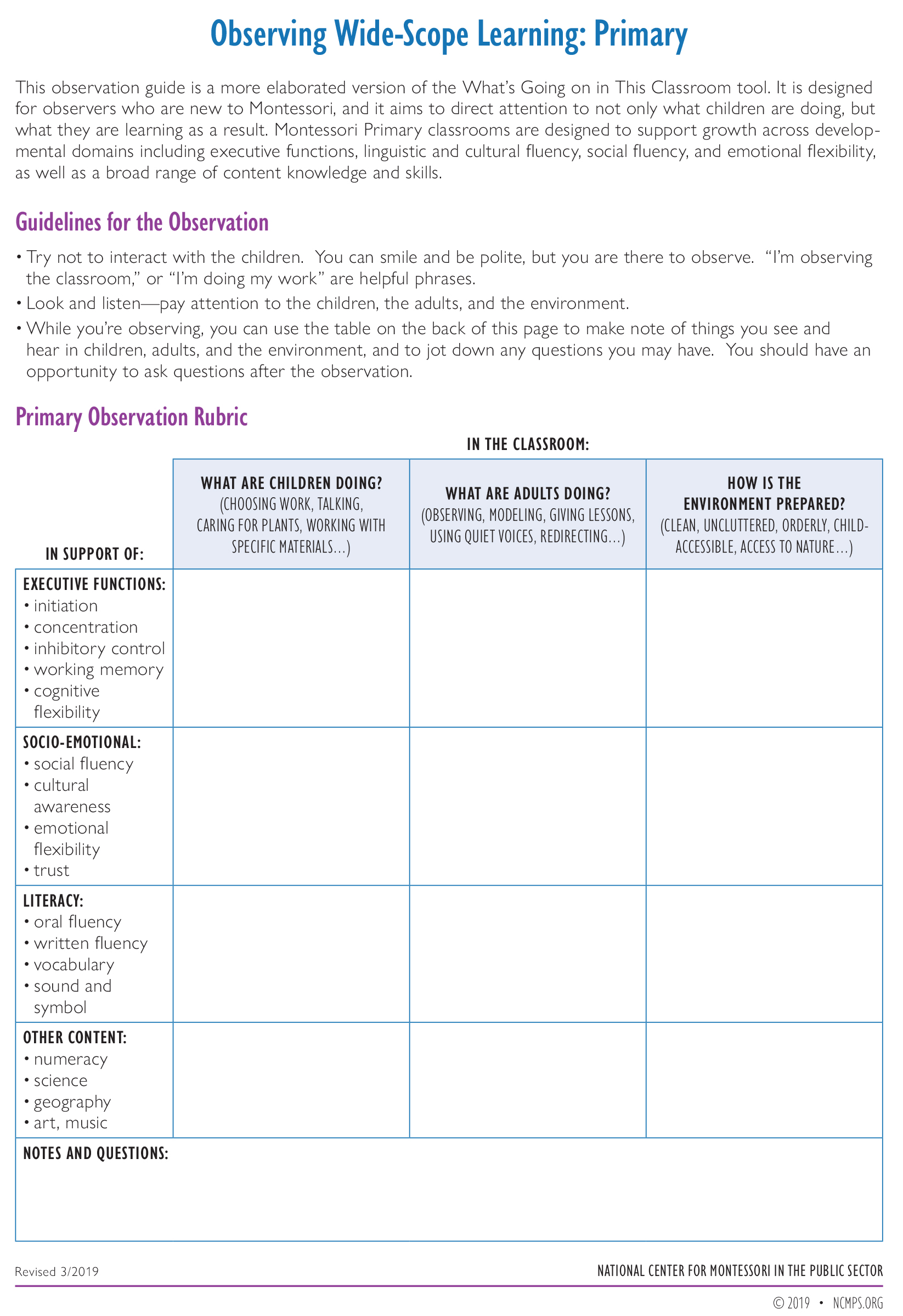
Observing Wide-Scope Learning—Primary
This tool orients observers to the elements of the Primary classroom (children, adults, and the environment) which support developmental and academic outcomes.
Chapter 3—Observation
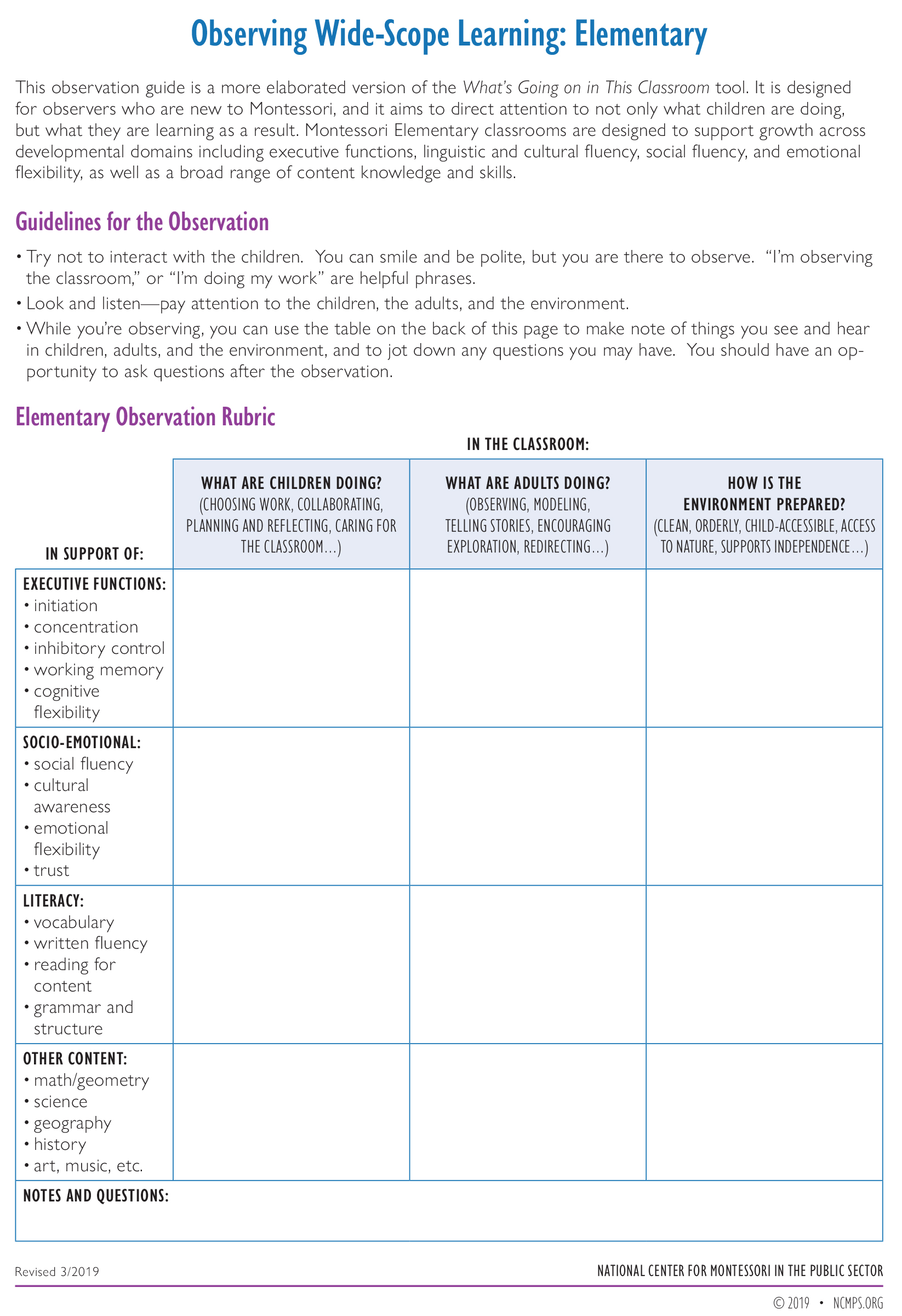
Observing Wide-Scope Learning—Elementary
This tool orients observers to the elements of the Elementary classroom (children, adults, and the environment) which support developmental and academic outcomes.
Chapter 3—Observation
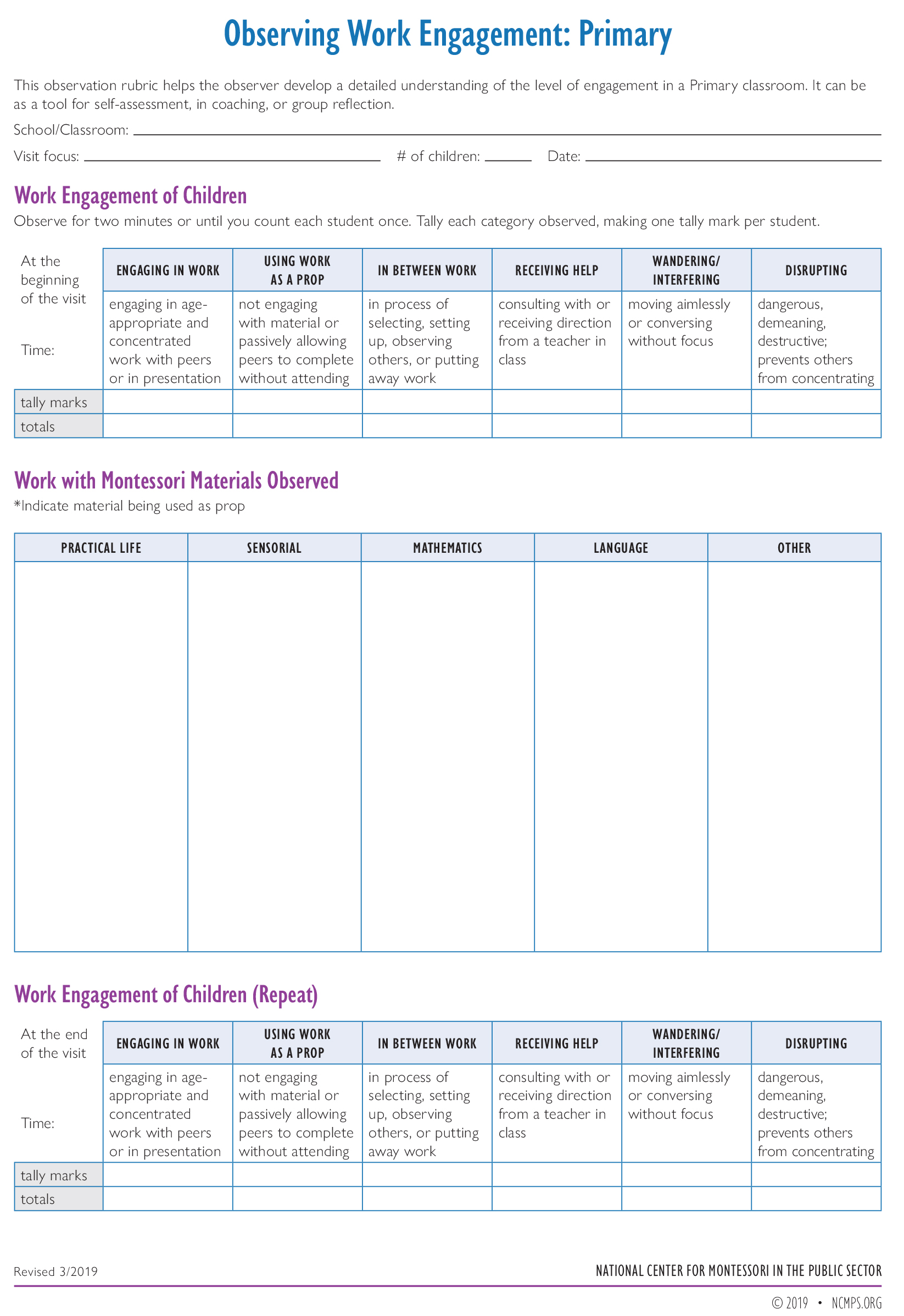
Observing Wide-Scope Learning—Primary
This tool helps teachers and coaches focus on and measure Primary children’s engagement, interactions, and use of materials.
Chapter 3—Observation
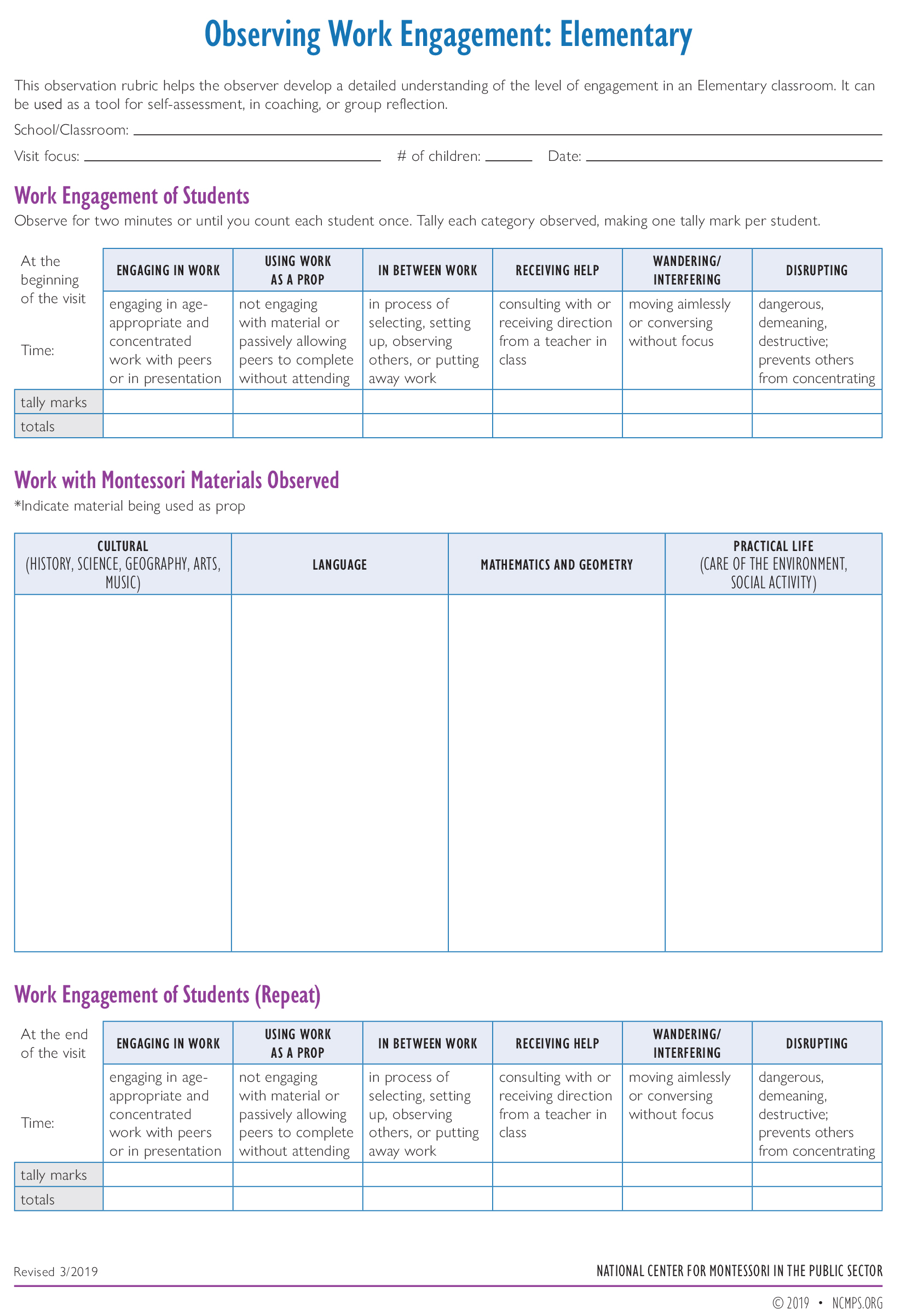
Observing Work Engagement—Elementary
This tool helps teachers and coaches focus on and measure Elementary children’s engagement, interactions, and use of materials.
Chapter 3—Observation
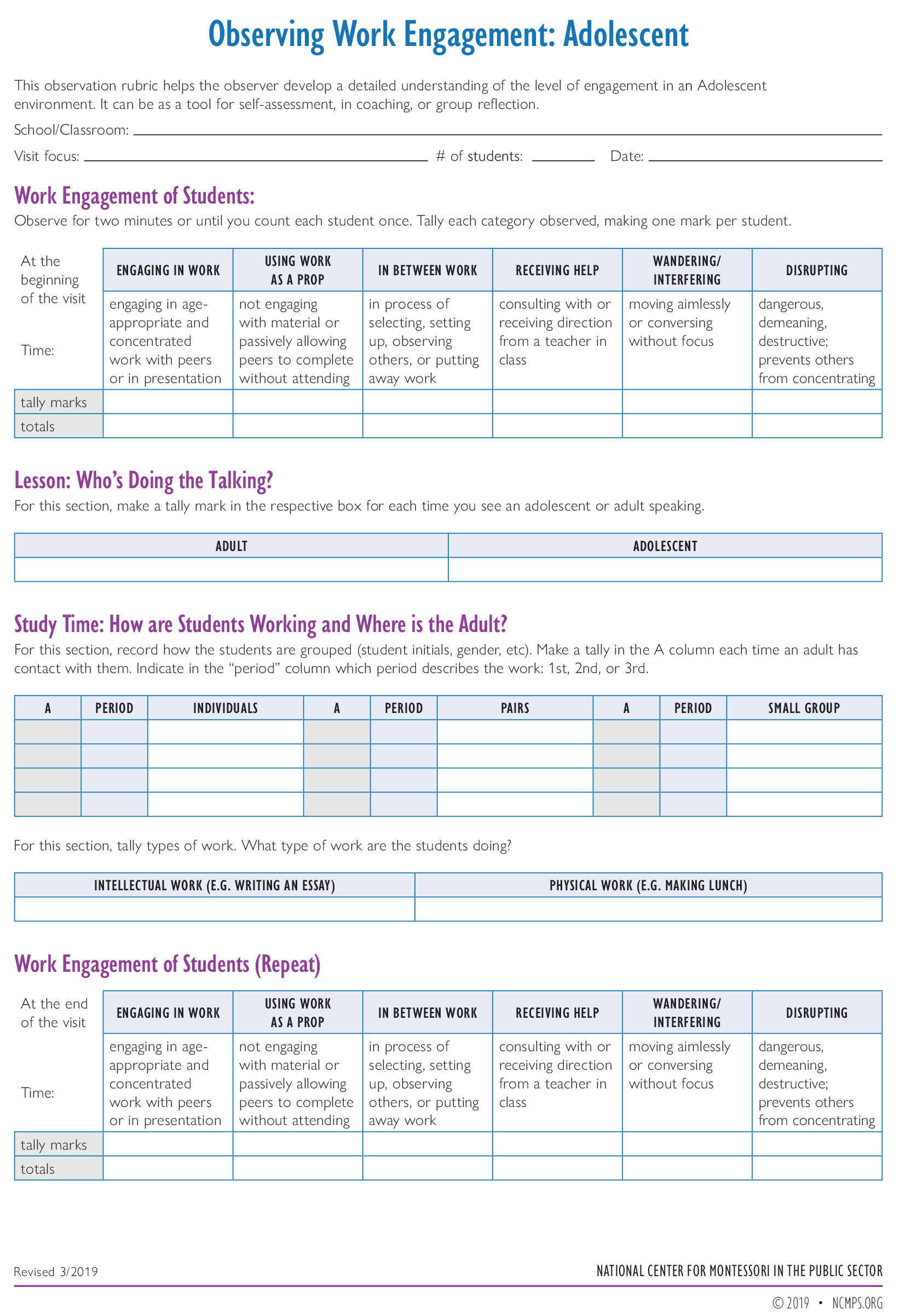
Observing Work Engagement—Adolescent
This tool helps teachers and coaches focus on and measure Adolescents’ engagement, interactions, and use of materials
Chapter 3—Observation
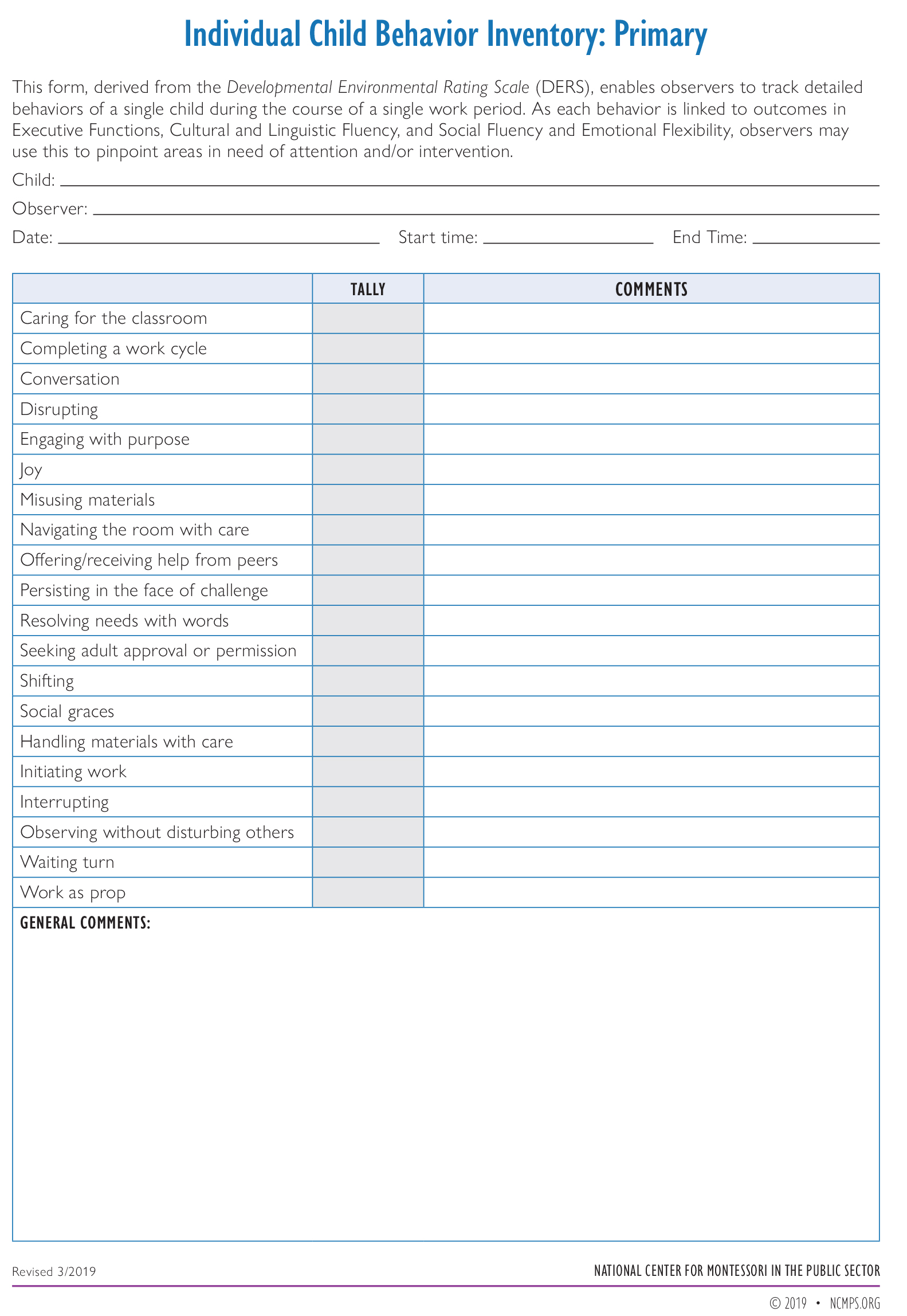
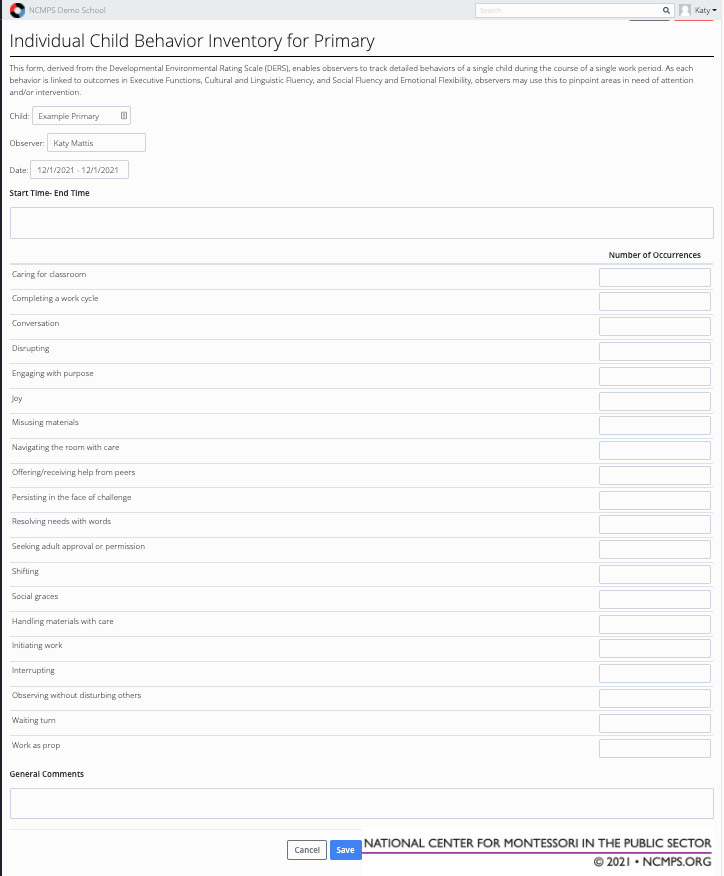
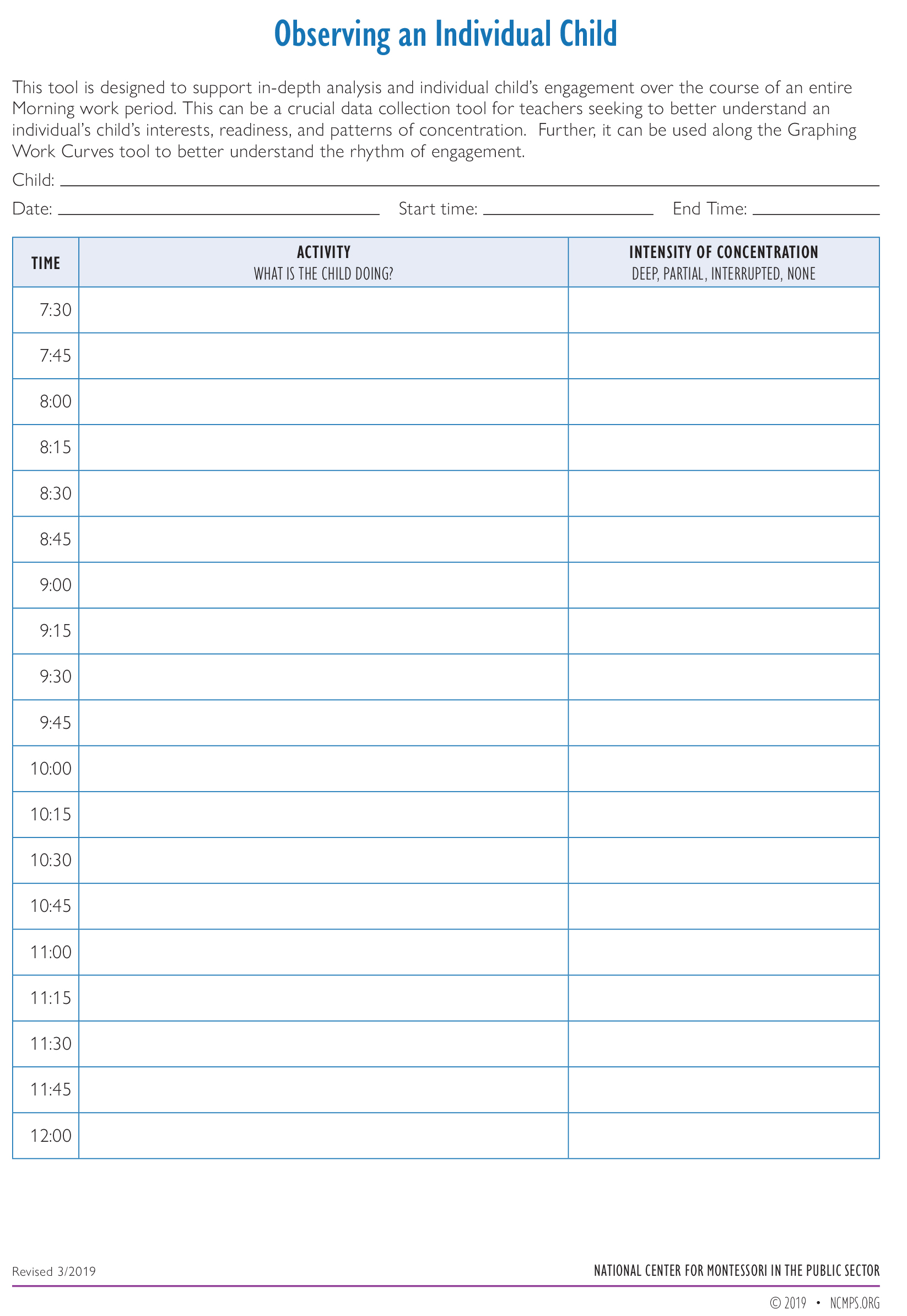
Observing an Individual Child
This is a simple yet powerful tool for tracking an individual child’s behavior and activity over a a monring work period
Chapter 4: Inputs
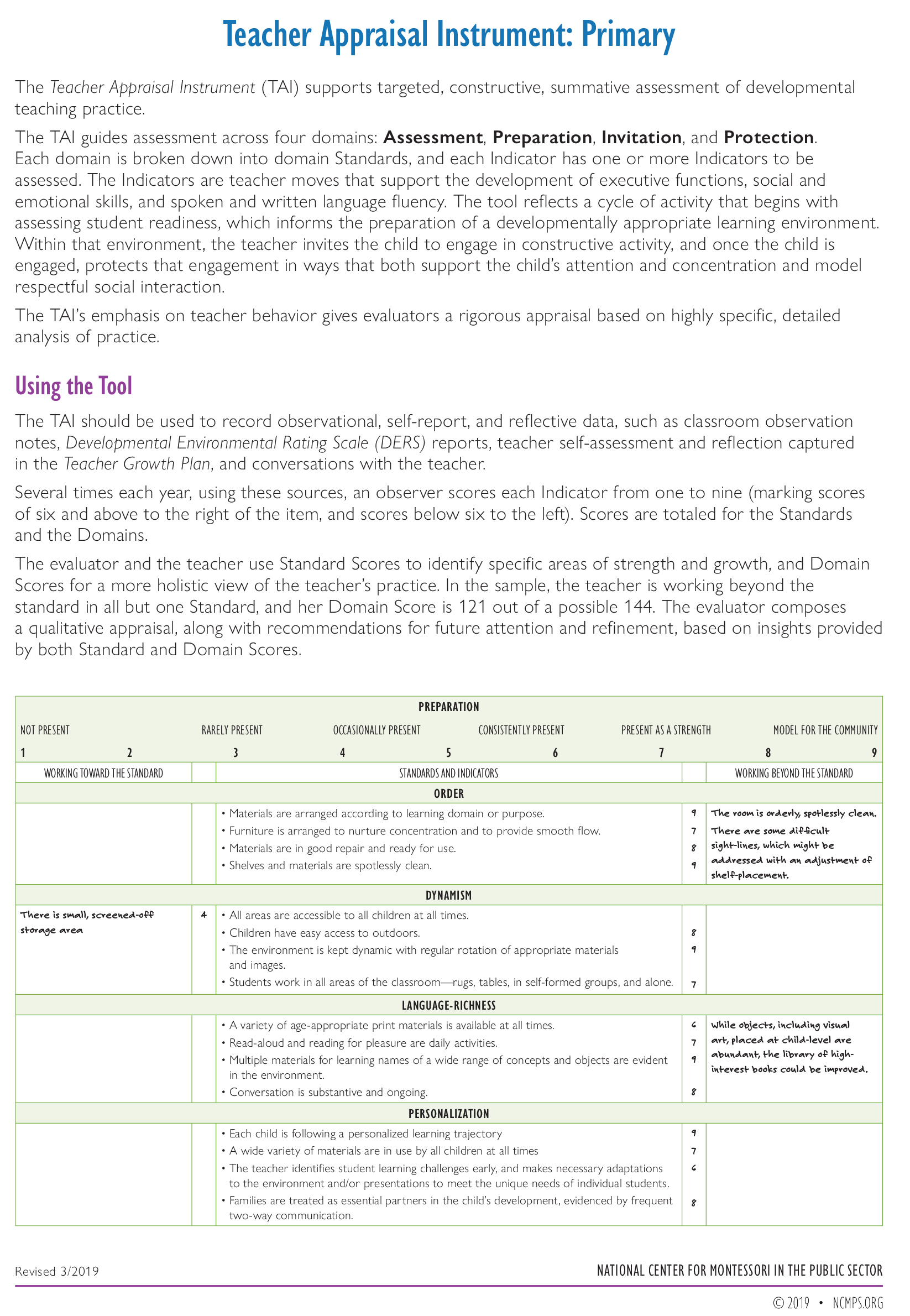
Teacher Appraisal Instrument—Primary
This is the front page of a comprehensive teacher appraisal tool assessing teacher behavior across four domains: Assessment, Preparation, Invitation, and Protection. Standards and indicators are aligned to developmental outcomes.
Chapter 4: Inputs
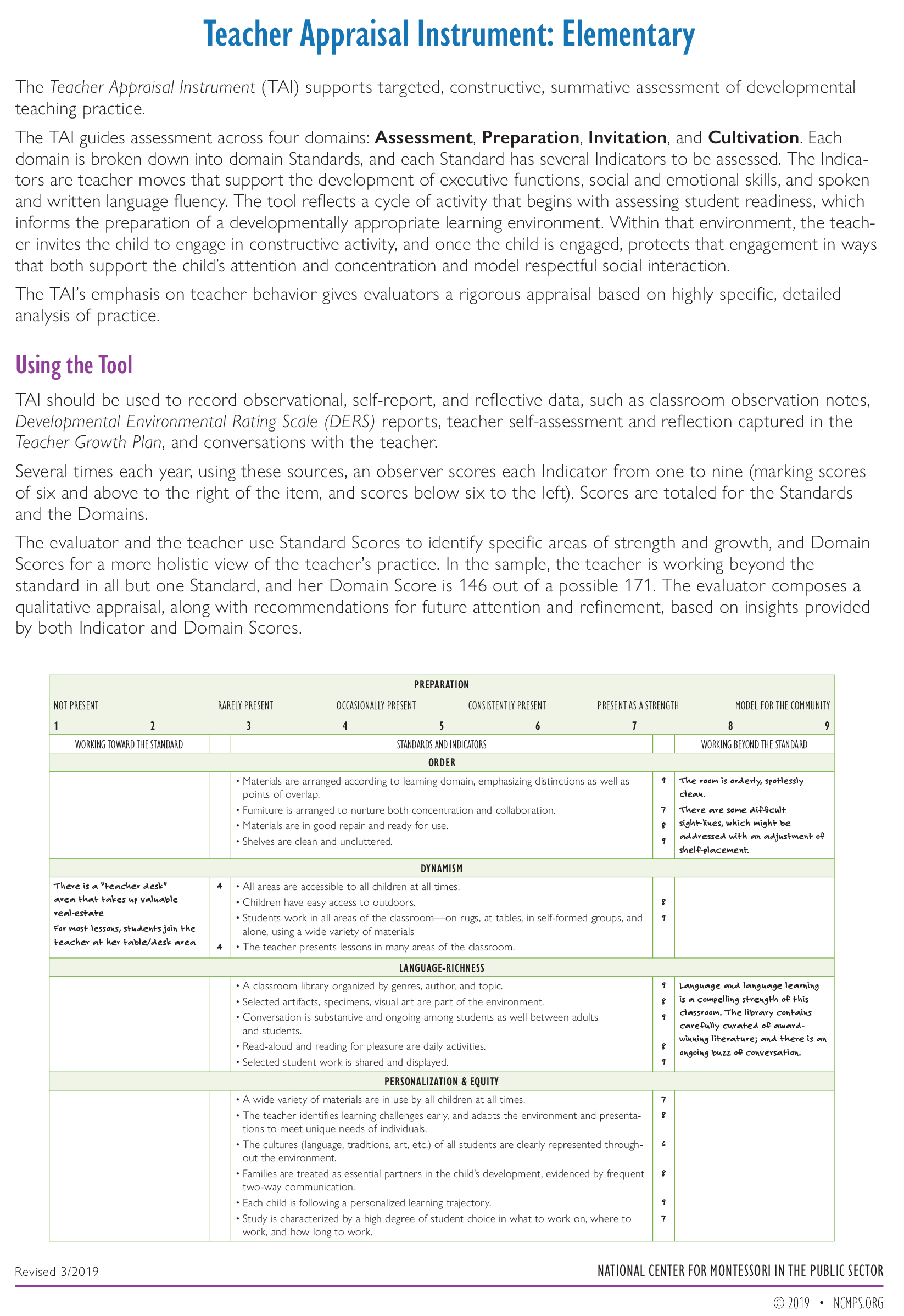
Teacher Appraisal Instrument—Elementary
This is the front page of a comprehensive teacher appraisal tool assessing teacher behavior across four domains: Assessment, Preparation, Invitation, and Cultivation. Standards and indicators are aligned to developmental outcomes.
Chapter 4: Inputs
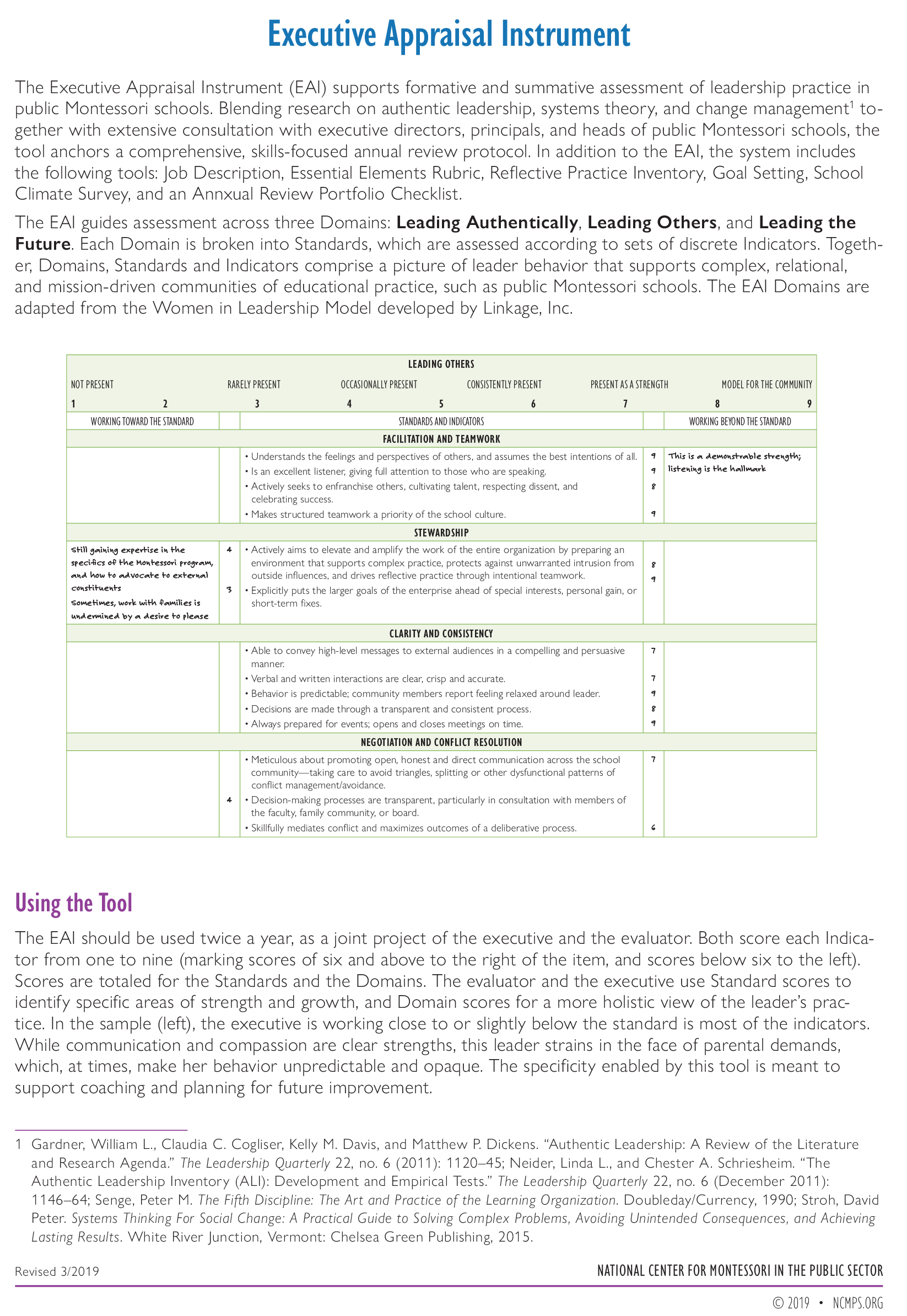
Executive Appraisal Instrument
This is the front page of a comprehensive leadership appraisal tool assessing practice and performance across three domains: Leading Authentically, Leading Others, and Leading the Future.
Chapter 4: Inputs
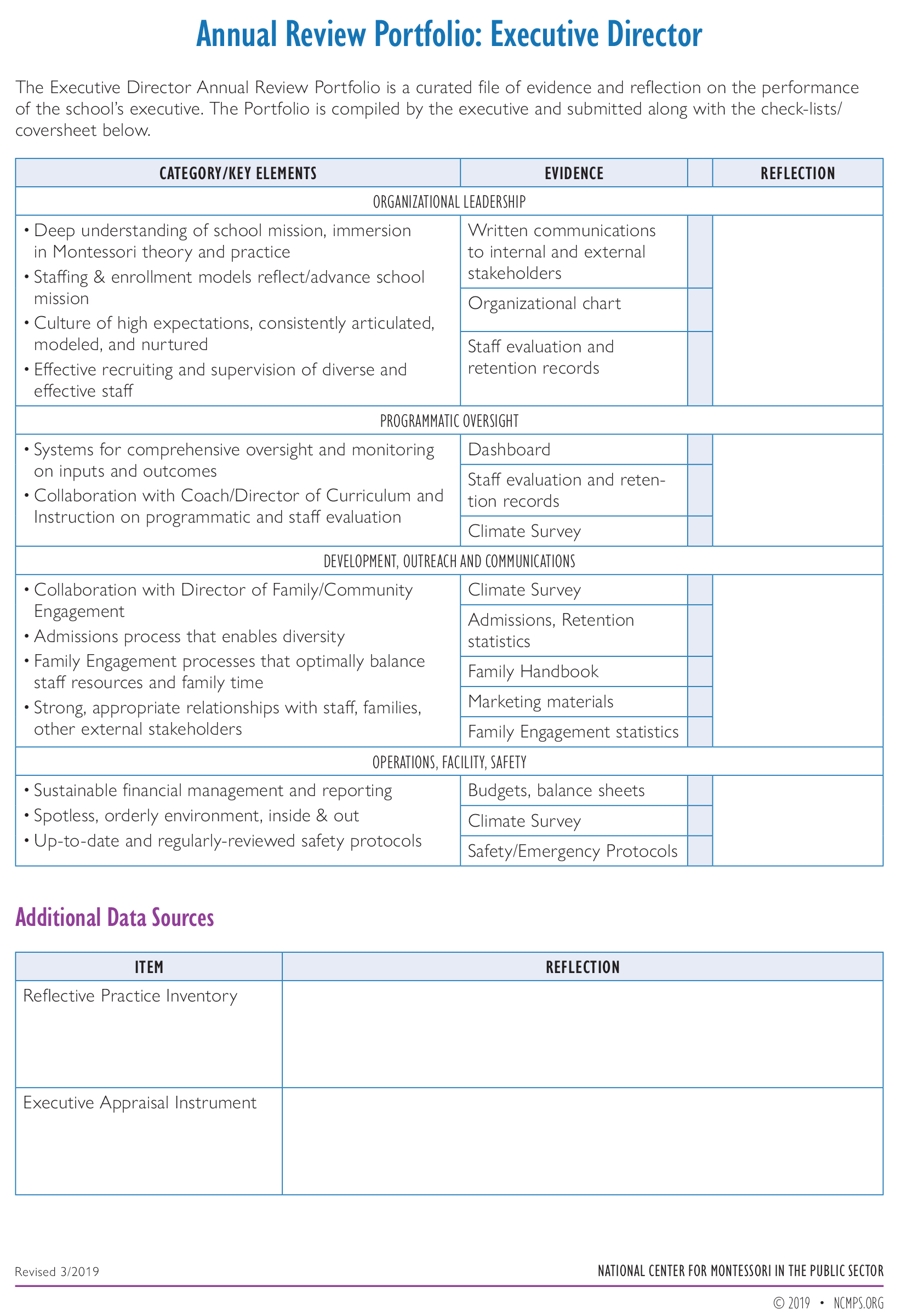
Annual Review Portfolio—Executive Director
This worksheet organizes a wide range of data sources and reflections to be used in an Annual Review of the school leader
Chapter 4: Inputs
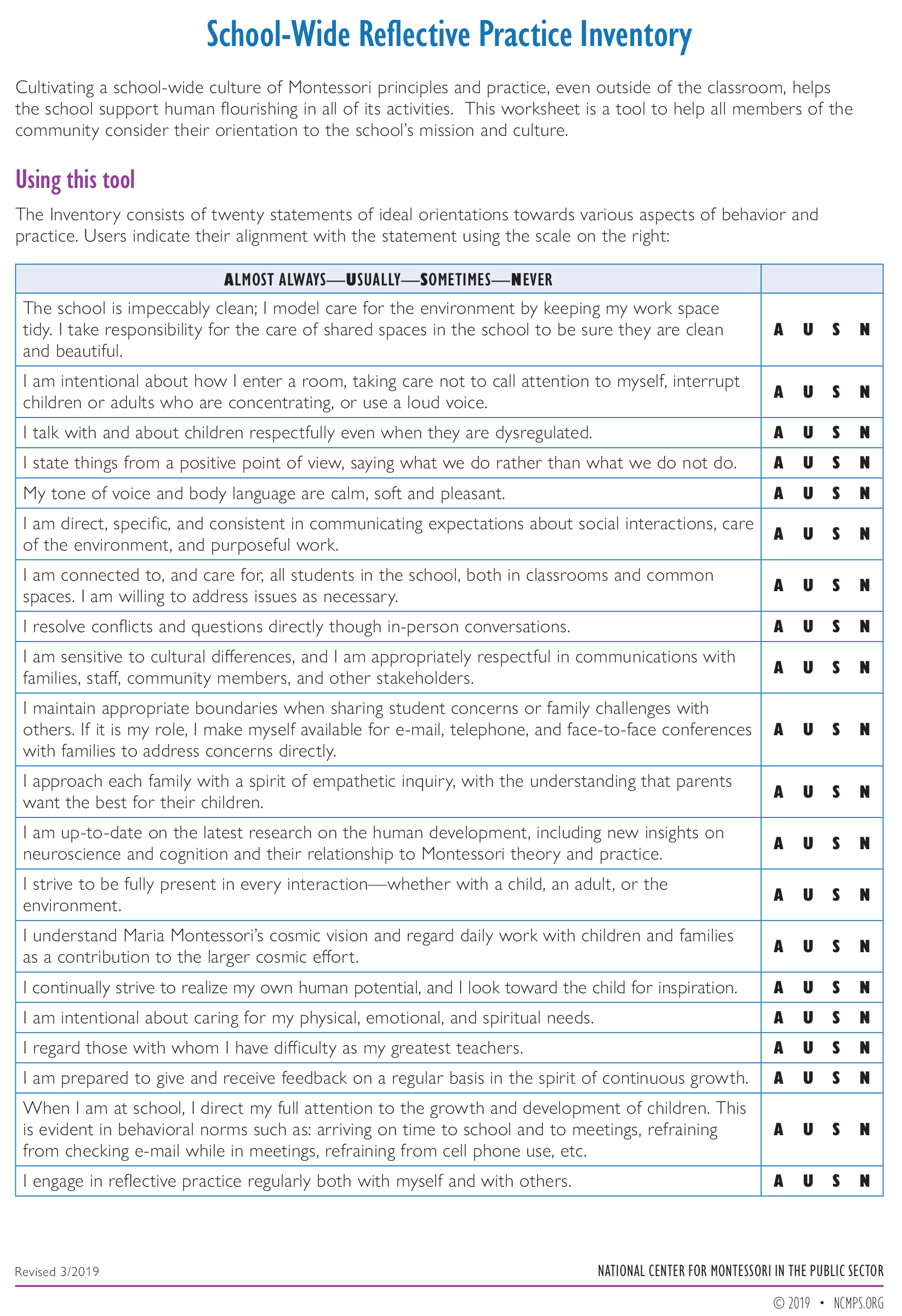
School-Wide Reflective Practice Inventory
This tool is designed for use by everyone working at the school, to help deve
Chapter 4: Inputs
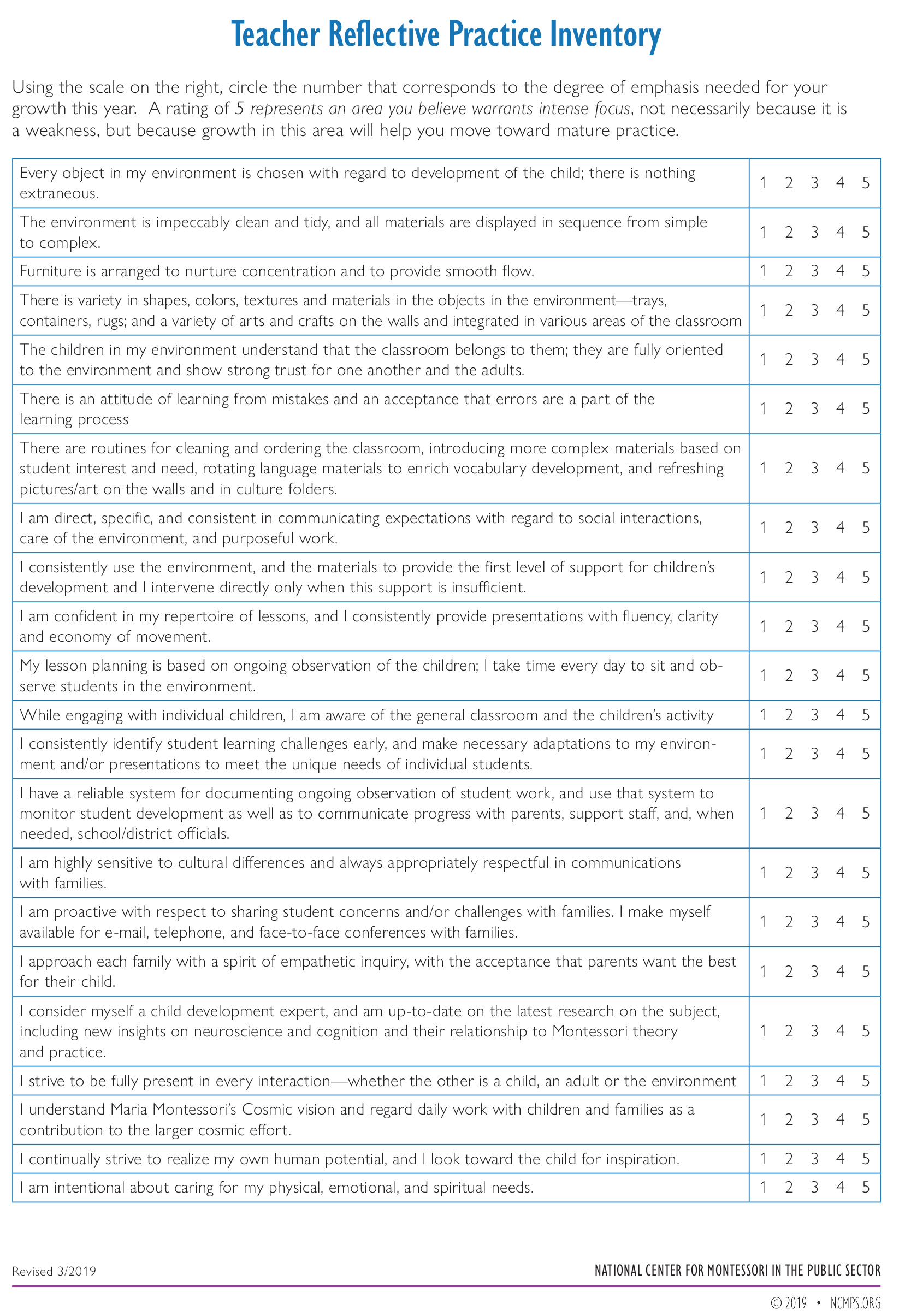
Teacher Reflective Practice Inventory
This tool helps teachers analyze their overall practice and identify priorities for growth.
Chapter 4: Inputs
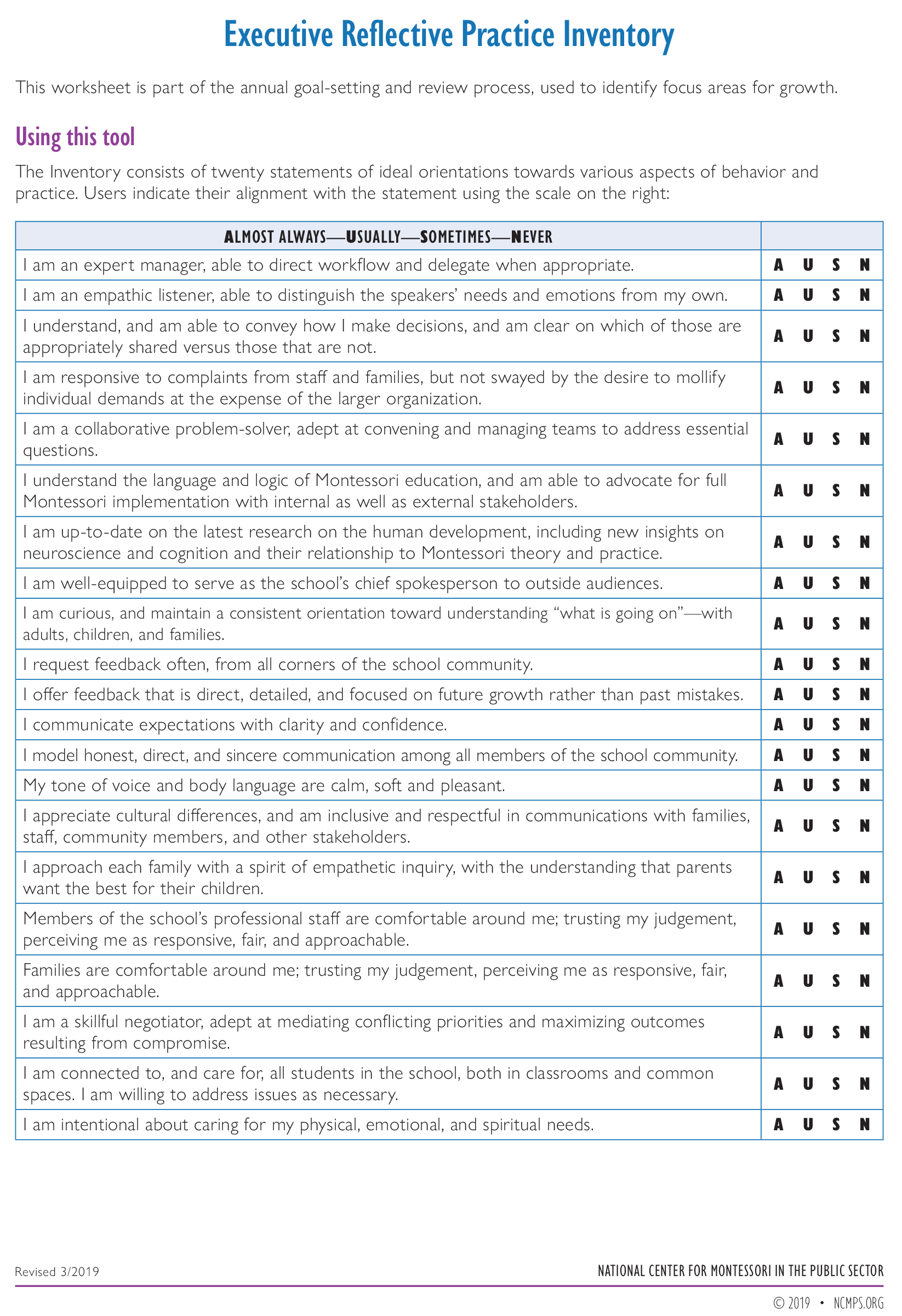
Executive Reflective Practice Inventory
This tool helps leaders analyze their leadership strenghs and weaknesses and identify priorities for growth.
Chapter 5: Outcomes
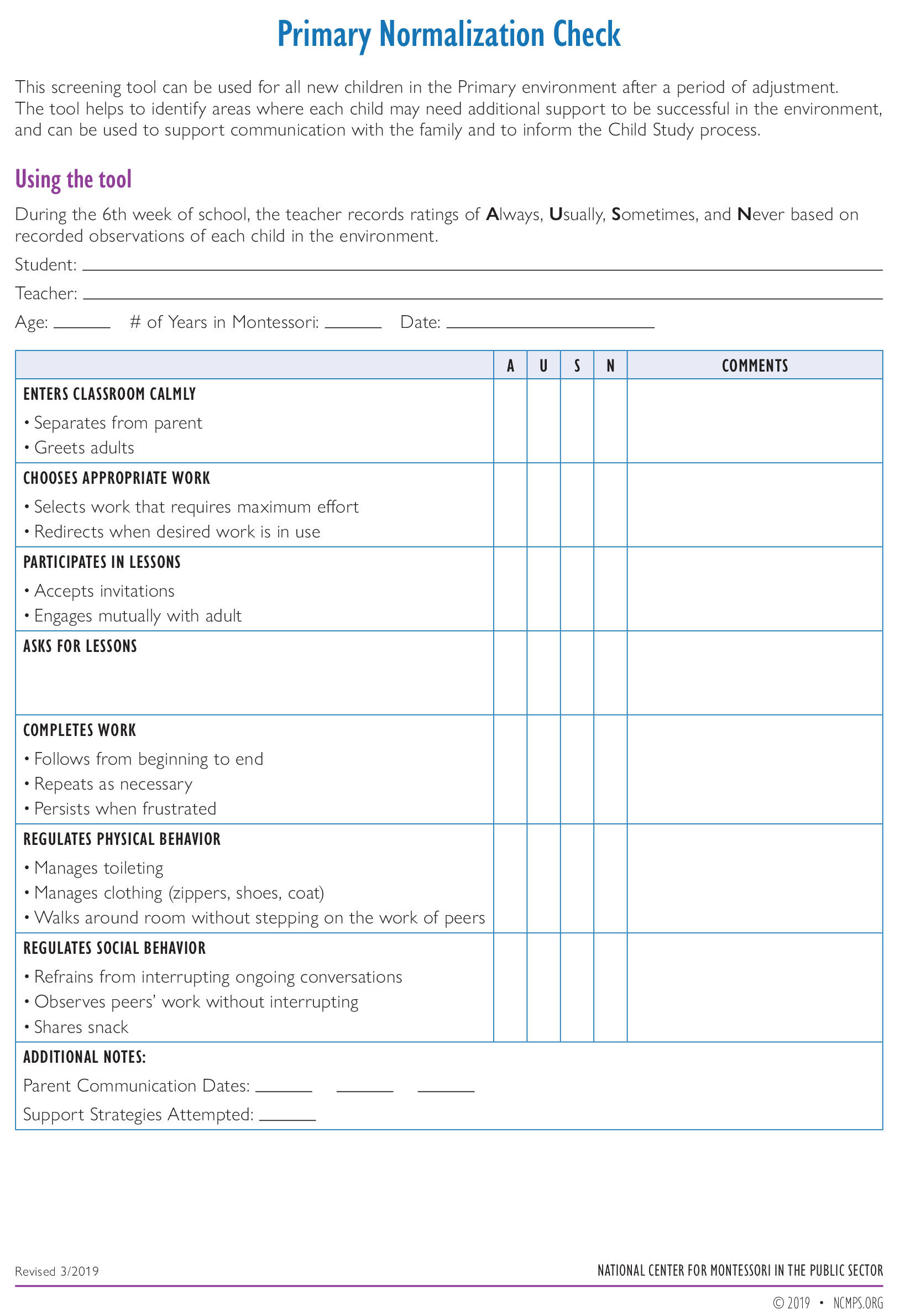
Primary Normalization Check
This tool is used with Elementary children near the beginning of the year to asses their adaptation to the environment.
Chapter 5: Outcomes
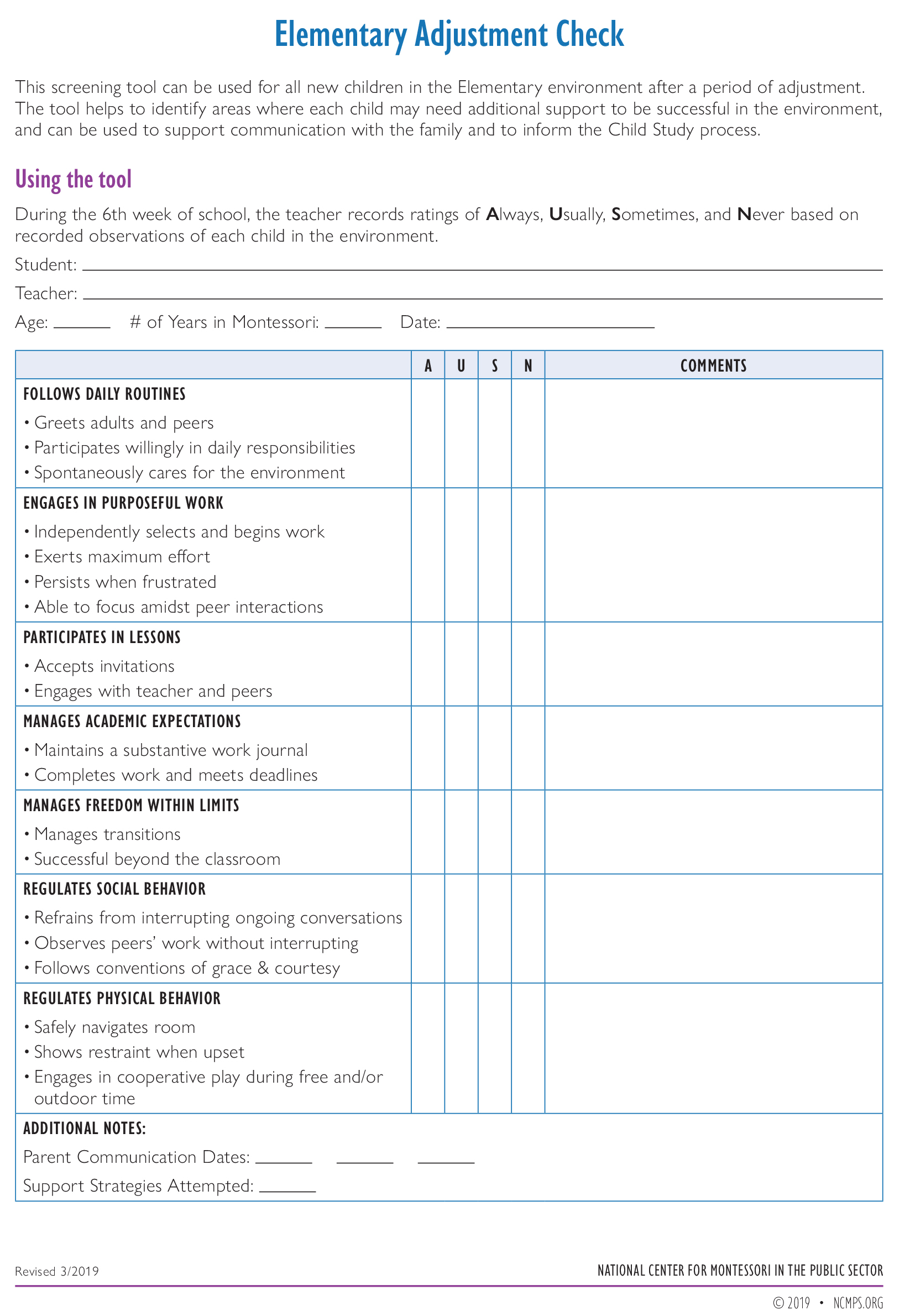
Elementary Adjustment Check
This tool is used with Primary children near the beginning of the year to asses their adaptation to the environment.
Chapter 5: Outcomes
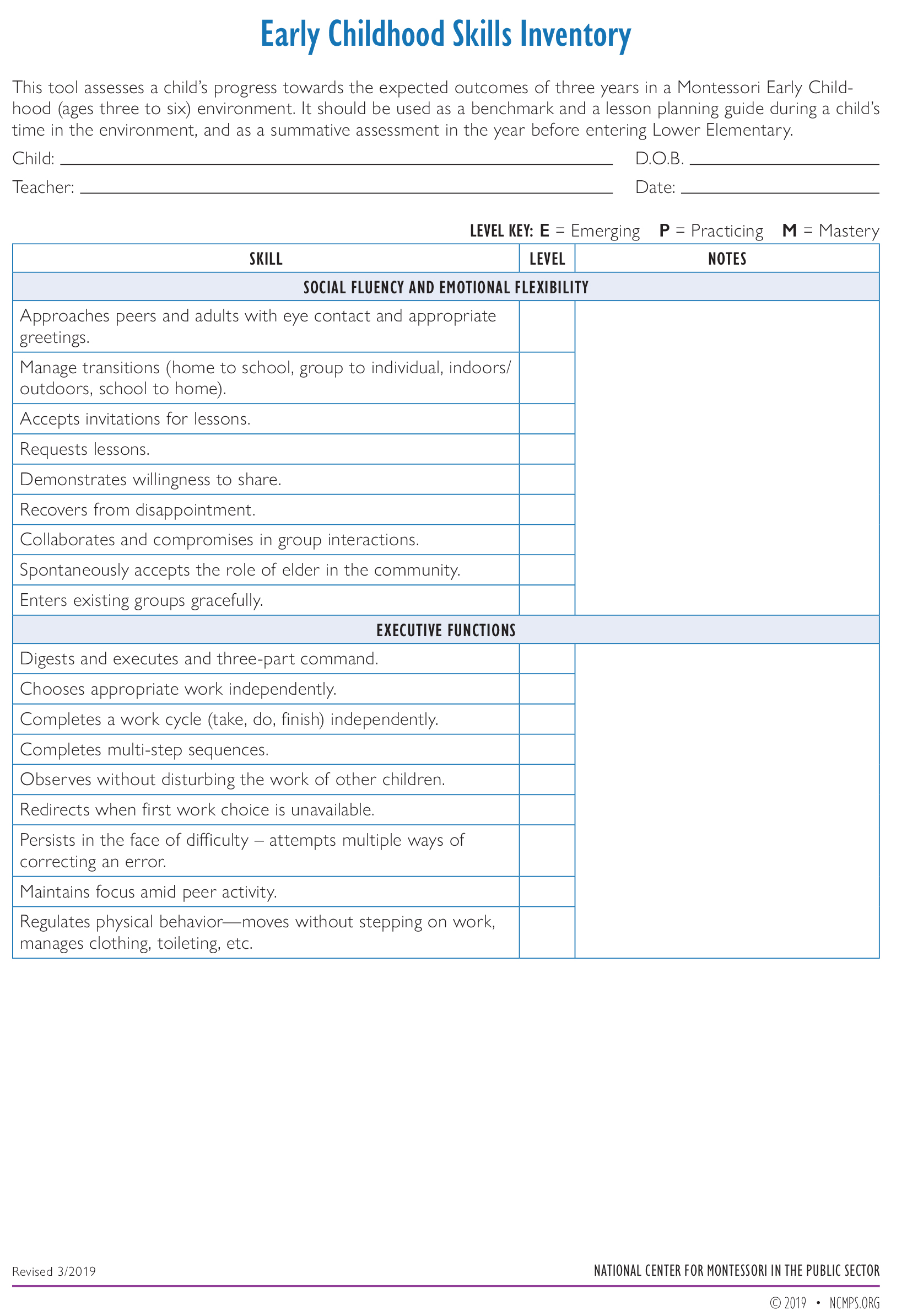
Early Childhood Skills Inventory
This tool provides a set of benchmarks for Early Childhood environments, to guide lesson planning and assess outcomes over a three-year period.
Chapter 5: Outcomes
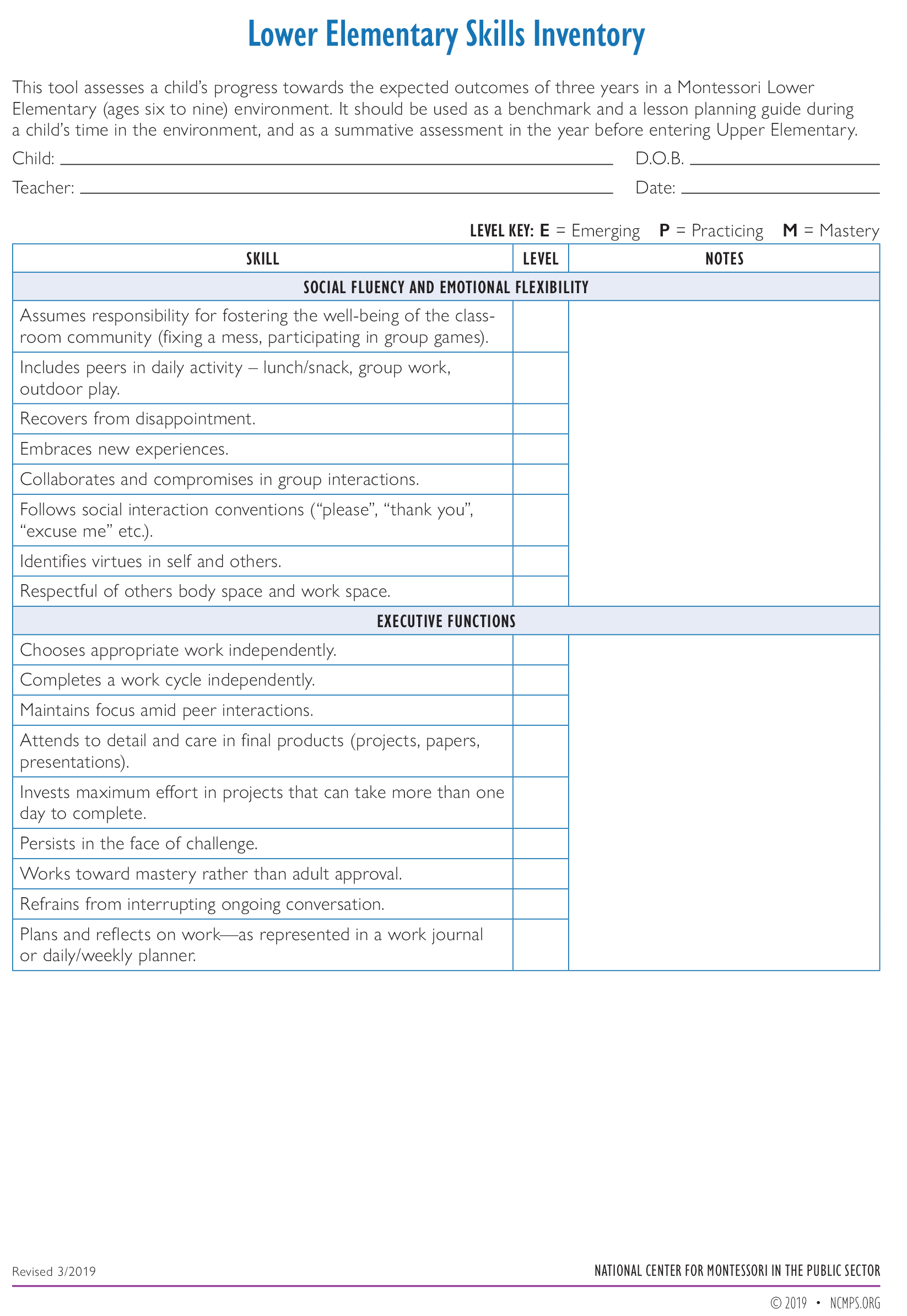
Lower Elementary Skills Inventory
This tool provides a set of benchmarks for Lower Elementary classrooms, to guide lesson planning and assess outcomes over a three-year period.
Chapter 5: Outcomes
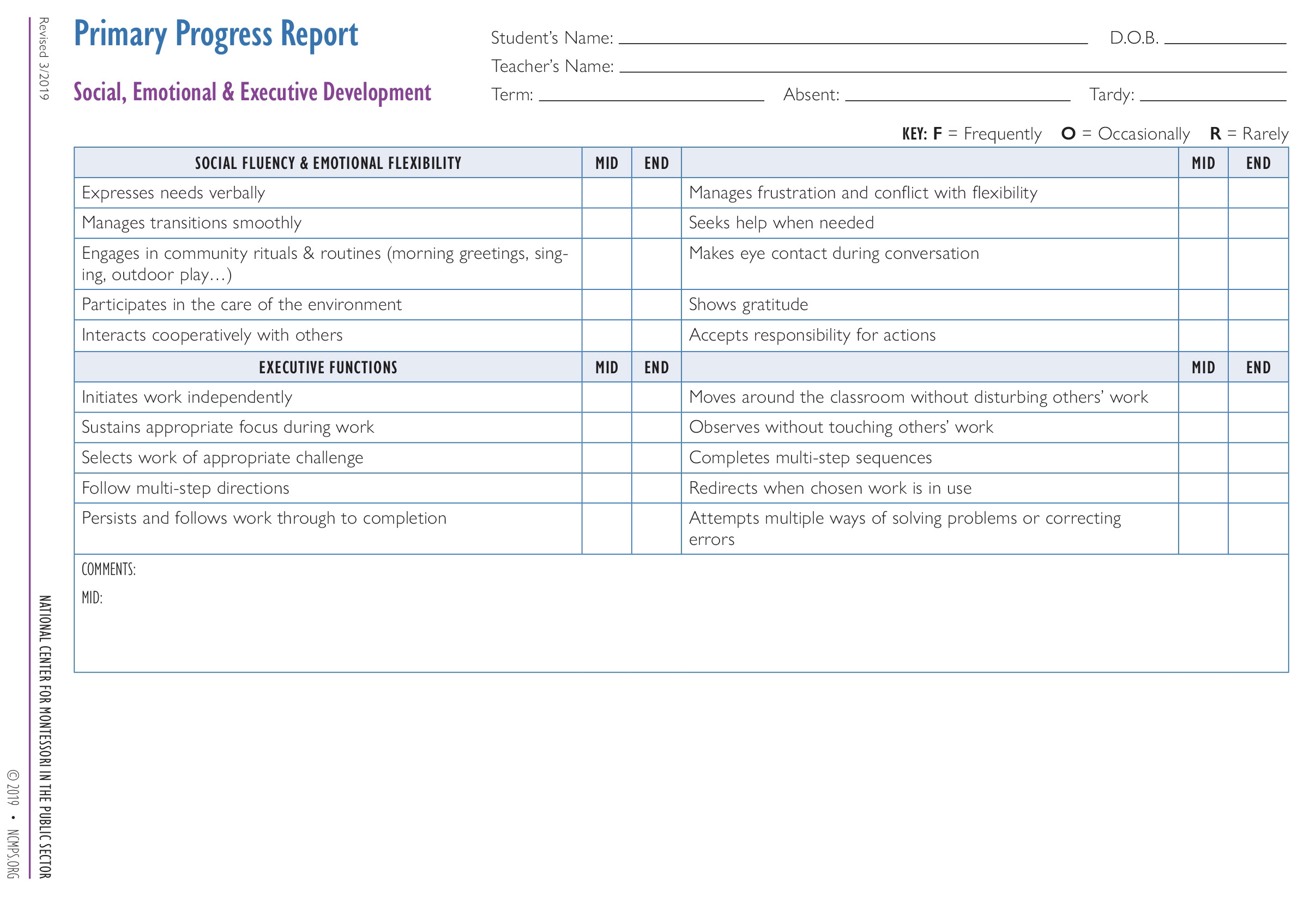
Primary Progress Report
This is a template for a broad-scope progress Primary-level report emphasizing developmental and executicve funtion growth.
Chapter 5: Outcomes
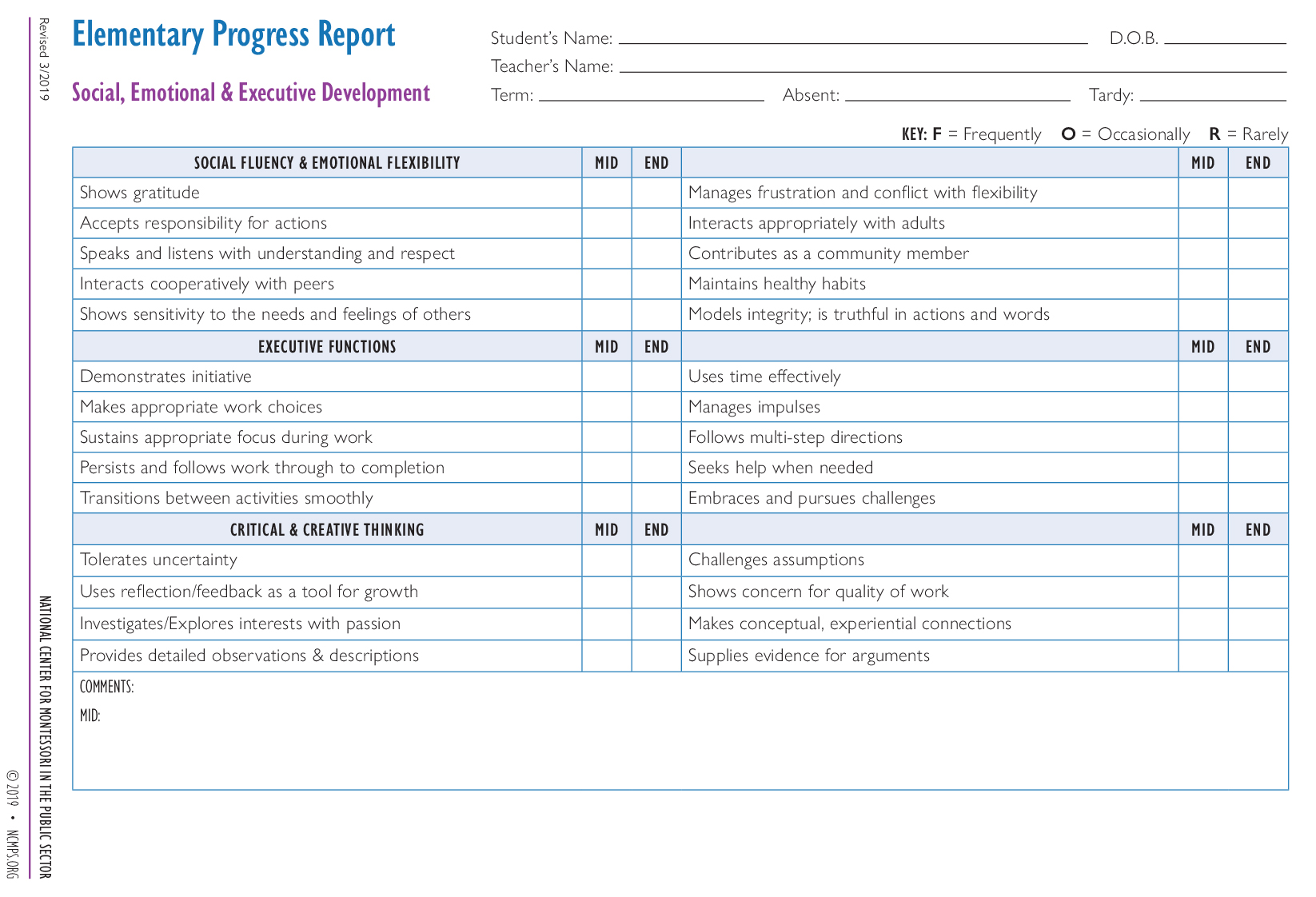
Elementary Progress Report
This is a template for a broad-scope progress Elementary-level report emphasizing developmental and executicve funtion growth.
Chapter 5: Outcomes
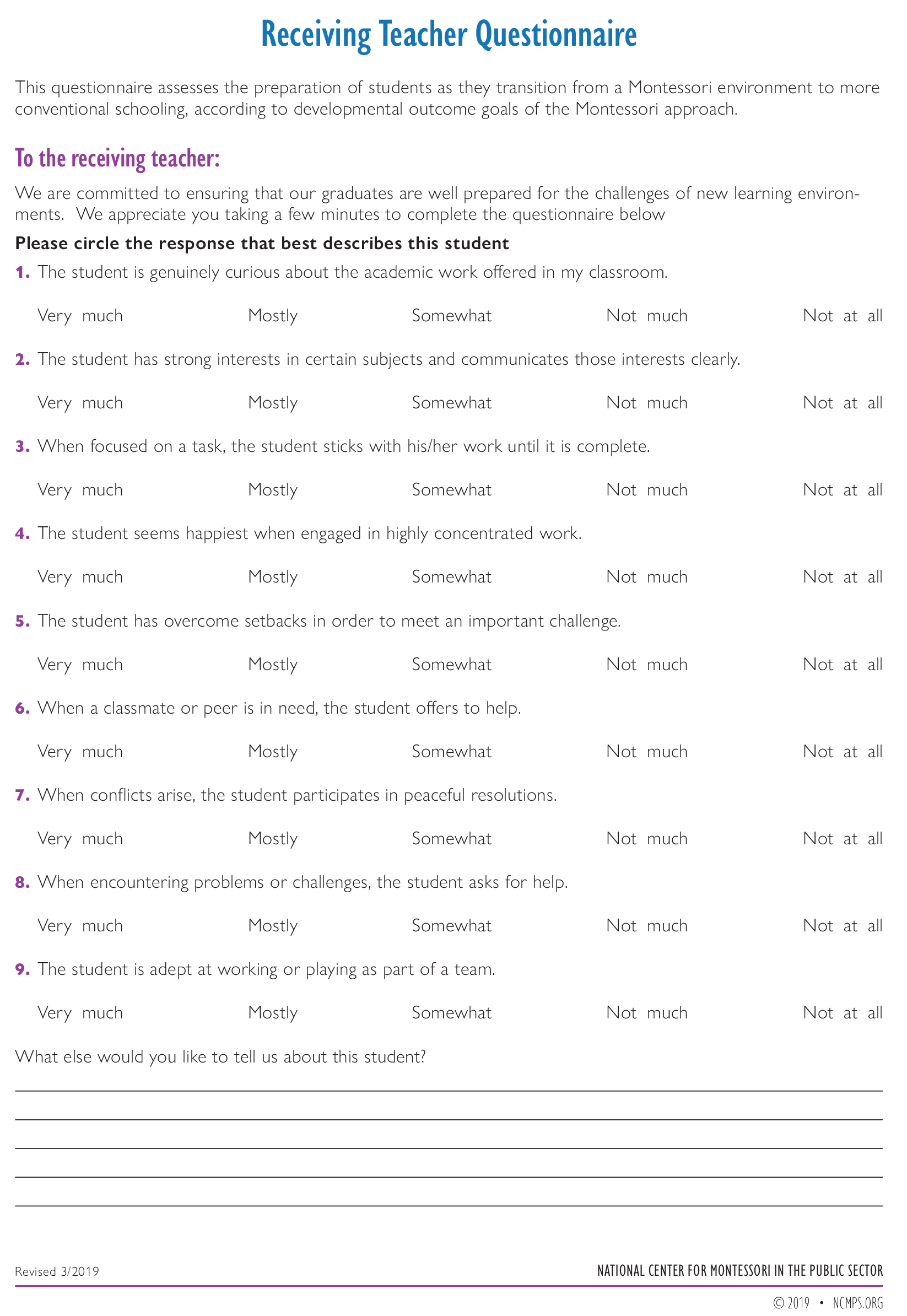
Receiving Teacher Questionnaire
This questionnaire gathers information and reflection from teachers receiving graduates of the Montessori program, to help assess perceived outcomes.
Chapter 5: Outcomes
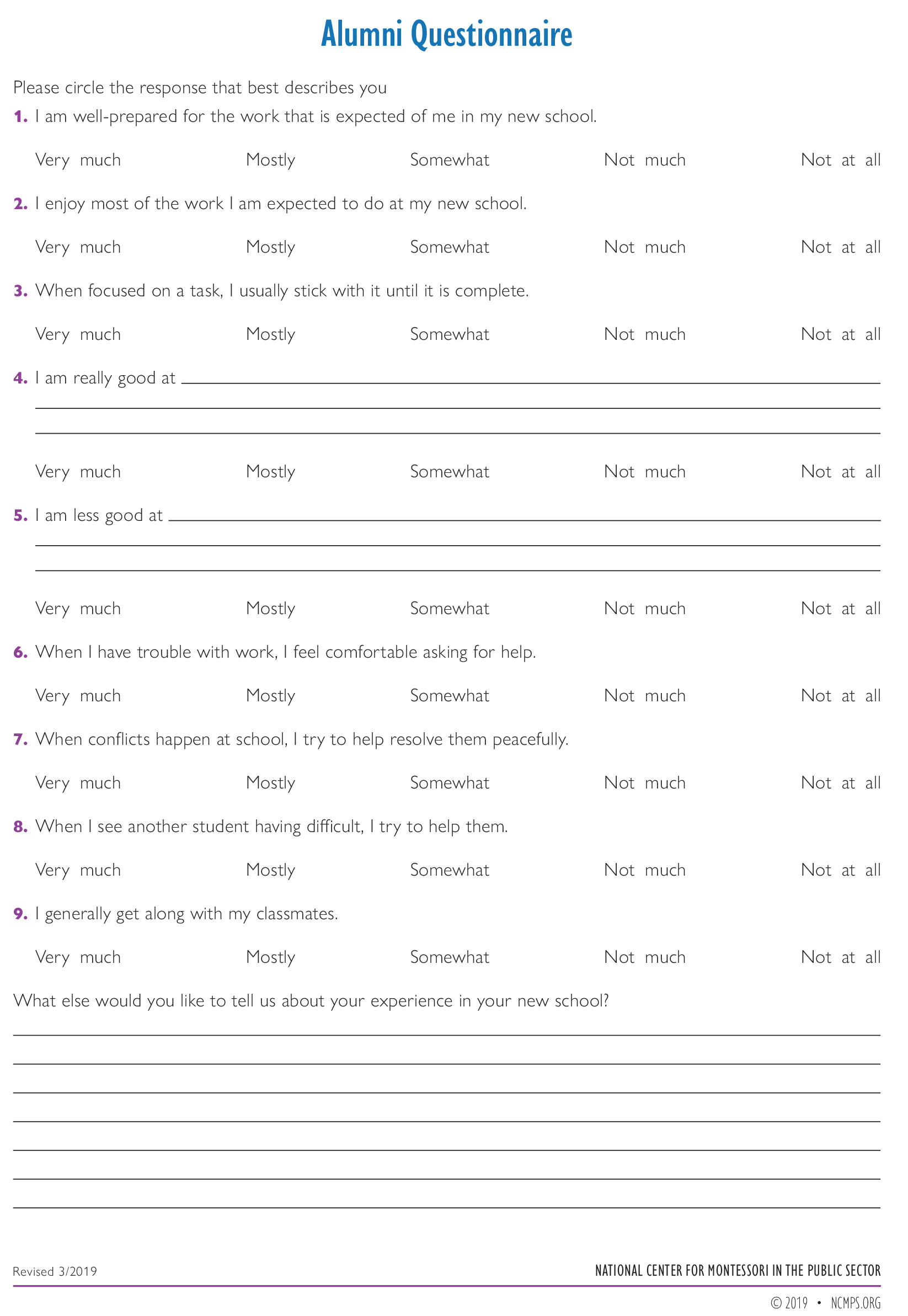
Alumni Questionnaire
This questionnaire gathers information and reflection from students after they leave the Montessori program, to help guide program development.
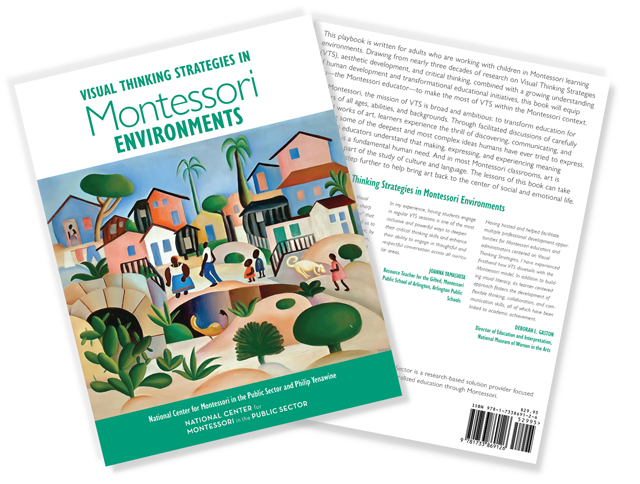
Visual Thinking Strategies in Montessori Environments
What’s going on in this picture?
Visual Thinking Strategies (VTS) is a powerful, Montessori-aligned practice for fostering critical thinking and deep discussions with children and adults of all ages.
Developed in the 1990s at the New York Museum of Modern Art and backed by research, VTS grew into much more than an art appreciation technique. Now used in schools, colleges and universities, science museums, the New York Times, and in many other projects, VTS begins within the simple question, “What’s going on in this picture?” and leads participants in a student-centered, open-ended discussion that emphasizes reflection, evidence, and clear communication skills.
Visual Thinking Strategies in Montessori Environments is a detailed, step-by-step guide to the technique created with Montessori in mind. Readers will learn to work guide children from three to eighteen through the facilitated discussions of images and objects—discussions that will enrich children’s thinking and writing across all areas of the curriculum.